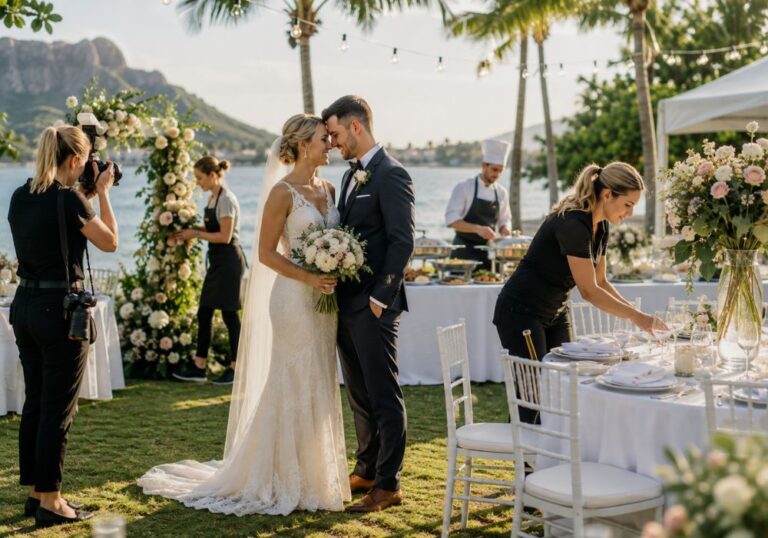
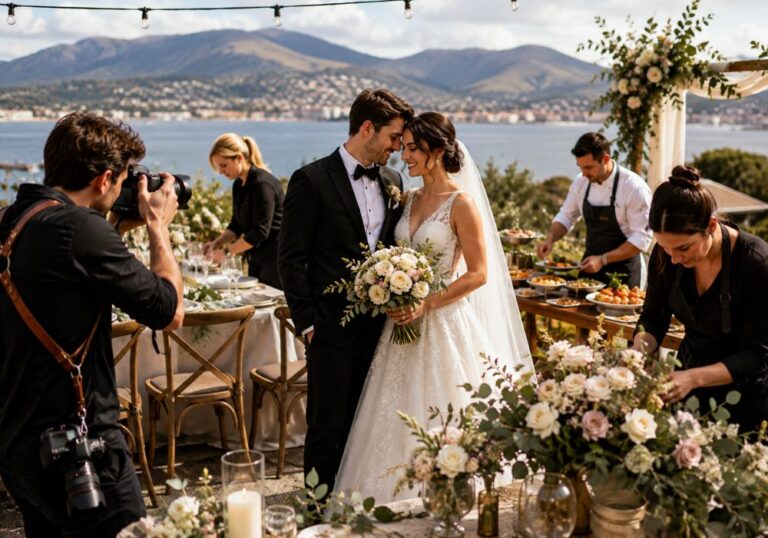
You’ve just got engaged. Great news. Then someone tells you to “start with the venue”, and you see a $17,000 base cost before food, photos, or flowers. That’s wedding planning. It’s exciting, but it can feel overwhelming, with choices that aren’t as simple as they seem.
The right vendors for you depend on your budget, your style, and where you’re getting married. A photographer who nails moody city shots might fall flat on a bright beach day.
You need honest and practical advice.
This guide cuts through the noise. It shows you how to find reliable vendors, avoid costly mistakes, and spend your budget where it really matters.
Let’s get started.
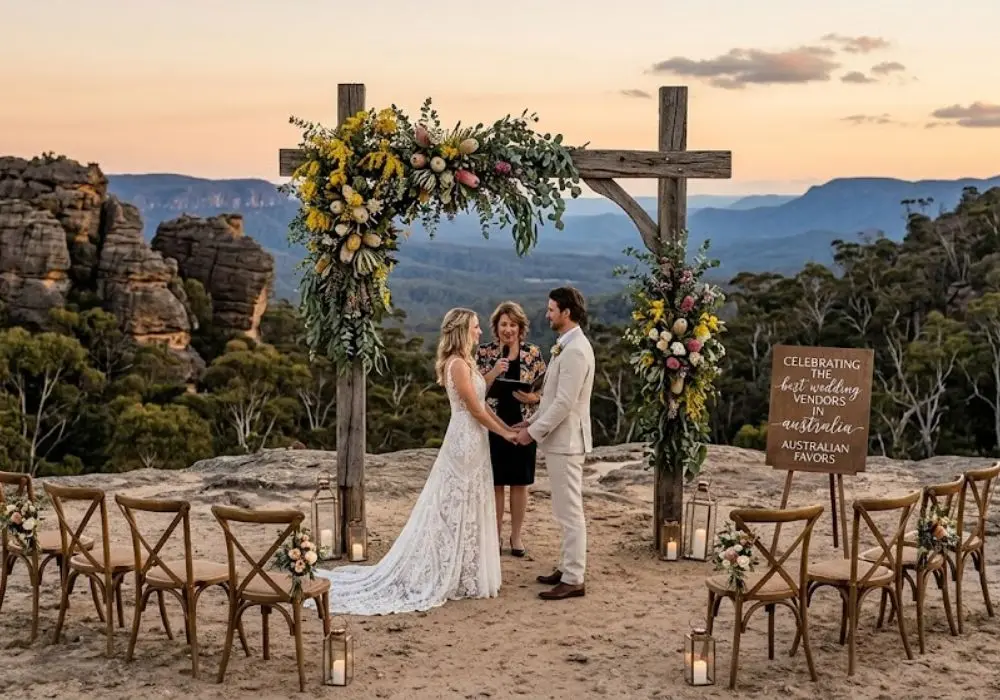
Why the Average Budget Figure Will Mislead You
A survey of more than 4,000 Australian couples found the average wedding cost was $38,252. But that figure includes small weddings, backyard events, and elopements that cost far less.
Most couples spend around 23% more than planned. Many aim for 116 guests but cut the list to around 88 to control costs.
New South Wales is usually the most expensive, with weddings costing between $37,000 and $41,000. Queensland sits lower at $26,000 to $30,000. Guest numbers play a big role. NSW weddings average 121 guests, while Queensland has about 74.
The gap isn’t just location. More guests mean higher catering costs, and Sydney vendors often charge higher prices.
How to Allocate Your Budget Across Vendor Categories
Venue and Catering
The average wedding venue in Australia costs $17,518. Most couples spend around 46% of their entire budget on the reception venue alone. Catering sits right behind that.
An all-inclusive venue that bundles food, beverage, and staffing costs more upfront but simplifies planning considerably. A dry-hire warehouse in Brunswick or Fortitude Valley gives you creative freedom but means you’re managing a caterer, a bar service, and furniture hire separately, which quickly adds up and adds stress.
Peak season runs from March to April and September to November. Prices are higher. Off-peak dates or weekdays can give you room to negotiate.
Photography
Roughly 90% of Australian couples hire a professional wedding photographer, the highest uptake of any service, and the average spend sits at $3,567. In Sydney and Melbourne, quality photographers easily start at $4,500 to $6,000 for full-day coverage.
A photographer whose portfolio shows three actual weddings and whose pricing is 40% below market rate is a risk. Not worth taking. Ask to see a full gallery from a recent wedding, not a curated highlight reel of their best 30 shots.
Well-known photographers like Jonas Peterson and James Day have strong reputations in the Australian market, but many skilled photographers work across cities and regional areas.
Celebrant
The average Australian celebrant costs $1,031, though a more personalised, longer ceremony can cost more.
Celebrants are registered with the Attorney-General’s Department and must hold a Certificate IV in Celebrancy or equivalent qualification, making them one of the few licensed vendor types in the industry. Don’t confuse “licensed” with “good at their job,” though. A licensed celebrant who reads a generic script and mispronounces your grandmother’s name is worse than useless. Meet them in person or via video call before booking.
Flowers
The average Australian couple spends $2,639 on wedding flowers, but this figure is frequently blown by couples who fall in love with elaborate centrepieces on Pinterest and don’t realise the labour costs involved in a 200-stem installation.
Set your budget early and be clear with your florist. A good florist will tell you honestly what’s achievable and where to prioritise, whether that’s the bridal bouquet, the ceremony arch, or table arrangements. If they keep pushing options above your budget, move on.
The Only Vendor Rating System Worth Trusting in Australia
Before you open Instagram and get lost in aesthetics for four hours, understand how the local industry benchmarks quality.
The Australian Bridal Industry Academy (ABIA) has been operating since 1996. Vendors are rated across four areas: quality of product, quality of service, attitude of staff, and overall value. Each couple rates out of 100%.
To qualify as an ABIA Awards Finalist, vendors must maintain a customer satisfaction rating above 95%. The highest honour, the National Designer of Dreams Award, requires an average rating above 98% over four consecutive years. All decisions are made entirely by couples with no judging panel involved.
This matters because the wedding industry in Australia is largely unregulated. Other than marriage celebrants, most wedding vendors don’t need a licence or formal qualification to operate. It’s for this reason that ABIA’s mission is to promote experienced and trustworthy vendors while protecting couples.
When shortlisting vendors, check their ABIA profile before anything else. A vendor with 200 five-star reviews on Google is less meaningful than one with verified post-wedding ratings through ABIA’s system.
What Vendors Don’t Want You to Know About Contracts
The Australian wedding industry has no mandatory standard contract. Your level of protection depends on each vendor.
A clear contract must specify dates, times, locations, quantities, specific services, all costs, including taxes and potential overtime fees, and what happens if you need to reschedule.
A few specifics worth demanding before you sign:
- A contingency clause should cover you if a vendor cannot attend.
- A payment schedule should include staged refunds based on timing. A fully non-refundable deposit with no flexibility is not typical.
- Force majeure terms should clearly allow rescheduling when unexpected events occur (such as natural disasters, serious illness, or government-mandated restrictions).
If a vendor delays or avoids providing a contract, take it as a warning. Review all terms carefully and ask direct questions before signing.
The Real Green Flags
These signs separate a great vendor from an average one.
They’ve worked at your venue before. This matters, especially for photographers and caterers. A photographer who knows the lighting at 4 pm in March can plan better and deliver more consistent results.
They respond quickly before you book. Early communication reflects how they’ll handle the whole process. If it takes a week to get a quote, expect delays later too.
They’re honest about limits. A florist who explains what your $800 budget can realistically cover is more reliable than one who agrees to everything and falls short on the day.
Where to Actually Find and Compare Vendors
The National Wedding Directory (thenationalweddingdirectory.com.au) lists over 2,500 verified vendors across all Australian states, with filters by location and category.
ABIA (abia.com.au) shows verified couple ratings directly on each vendor profile the most trustworthy review system in the Australian wedding industry.
Wedshed (wedshed.com.au) is ideal for non-traditional vendors: food trucks, grazing tables, elopement celebrants, and stylists who don’t feel corporate.
Junebug Weddings has a well-vetted Australian directory that leans toward editorial and documentary-style photographers and videographers.
Data sources:
- Australian Bureau of Statistics (abs.gov.au)
- Attorney-General’s Department (ag.gov.au)
- ASIC MoneySmart (moneysmart.gov.au)
- easyweddings.com.au/articles/wedding-cost
- canstar.com.au
- sbs.com.au
- thenationalweddingdirectory.com.au
- Junebug Weddings (junebugweddings.com)